Building a stronger, fitter body doesn’t happen by accident. It requires strategic planning, consistent effort, and the right tools to track your progress. Machine workout templates offer a structured approach to fitness that eliminates guesswork and delivers reliable results.

Whether you’re stepping into the gym for the first time or looking to break through a plateau, having a proven workout framework transforms your training from random exercises into a systematic progression. Machine-based workouts provide stability, safety, and targeted muscle engagement that free weights sometimes can’t match, especially for those mastering proper form and technique.
🎯 Why Machine Workout Templates Are Your Secret Weapon
Machine workout templates serve as your personal roadmap to fitness success. Unlike wandering aimlessly from one piece of equipment to another, these structured plans ensure every session contributes meaningfully to your goals. They eliminate decision fatigue, allowing you to focus entirely on execution and intensity rather than wondering what exercise comes next.
The beauty of machine-based training lies in its accessibility and consistency. Machines guide your movement patterns, reducing injury risk while allowing you to safely push closer to muscular failure. This controlled environment creates the perfect conditions for progressive overload—the fundamental principle behind all muscle growth and strength gains.
Templates also provide measurable benchmarks. When you follow a structured program, you can track weights, repetitions, and workout duration with precision. This data becomes invaluable for identifying what works, what doesn’t, and how to adjust your approach for continuous improvement.
🏋️ Understanding the Fundamentals of Effective Machine Training
Before diving into specific templates, understanding the principles that make machine workouts effective is crucial. Machines offer fixed movement paths that isolate specific muscle groups, allowing you to concentrate entirely on contraction quality and time under tension. This isolation proves particularly valuable when targeting lagging body parts or working around injuries.
The stability machines provide means your smaller stabilizer muscles don’t limit your performance on major movements. While free weights certainly have their place, machines allow you to safely load muscles with heavier resistance, creating powerful growth stimuli without the technical complexity of balancing barbells or dumbbells.
Progressive Overload: The Non-Negotiable Principle
Your muscles adapt to stress by growing stronger and larger, but only when consistently challenged beyond their current capacity. Progressive overload means gradually increasing the demands on your musculoskeletal system. With machines, this becomes straightforward—add five pounds to the stack, perform one additional repetition, or reduce rest periods between sets.
Tracking these incremental improvements separates those who make consistent gains from those who spin their wheels indefinitely. Every workout should aim to slightly exceed what you accomplished previously, whether through increased weight, volume, or intensity.
💪 The Complete Upper Body Machine Workout Template
This comprehensive upper body template targets all major muscle groups from multiple angles, ensuring balanced development and preventing muscular imbalances that lead to injury or aesthetic asymmetry.
Chest Development Circuit
Start with the chest press machine for foundational pushing strength. Position yourself so the handles align with mid-chest level, ensuring maximum pectoral activation. Perform four sets of 8-12 repetitions, focusing on controlled negative phases that take three seconds to lower the weight.
Follow with the pec deck or chest fly machine to isolate the chest without tricep involvement. This isolation allows you to completely exhaust the pectoral muscles. Complete three sets of 12-15 repetitions, maintaining constant tension throughout the movement and avoiding lockout at the contracted position.
Back Building Strategy
Lat pulldown machines develop width across your upper back. Use a wide grip attachment and focus on pulling your elbows down and back rather than simply moving the weight. Four sets of 8-12 repetitions build impressive v-taper development.
Seated row machines target the middle back thickness. Maintain an upright torso and squeeze your shoulder blades together at the end of each repetition. Three sets of 10-15 reps create the depth that makes your back truly impressive from all angles.
Shoulder Sculpting Sequence
The shoulder press machine allows heavy loading without balance concerns. Four sets of 8-12 repetitions build powerful, rounded deltoids. Adjust the seat height so you’re pressing slightly upward rather than straight overhead, which reduces shoulder joint stress.
Lateral raise machines isolate the side deltoids, creating width across your shoulders. Three sets of 12-15 repetitions with strict form and minimal momentum deliver superior results compared to swinging dumbbells with poor technique.
Arm Completion
Cable tricep pushdowns using the machine’s cable stack develop the horseshoe shape on your upper arm’s back. Three sets of 10-15 repetitions with full range of motion ensure complete tricep development.
Preacher curl machines or cable curl attachments isolate the biceps without allowing body momentum. Three sets of 10-12 repetitions with deliberate tempo create the pump that signals growth stimulus.
🦵 The Ultimate Lower Body Machine Workout Template
Lower body training separates committed athletes from casual gym-goers. These larger muscle groups demand intense effort but reward you with increased metabolism, improved athletic performance, and impressive physique development.
Quadriceps Dominance
The leg press machine serves as your foundation movement. Position your feet shoulder-width apart in the middle of the platform. Four sets of 10-15 repetitions with progressive loading builds powerful quads while minimizing lower back stress that squats sometimes create.
Leg extension machines provide pure quadricep isolation. While controversial among some coaches, when performed with controlled tempo and appropriate weight, they offer unique stimulus for the muscles on your thigh’s front. Three sets of 12-15 repetitions complete your quad training.
Hamstring and Glute Activation
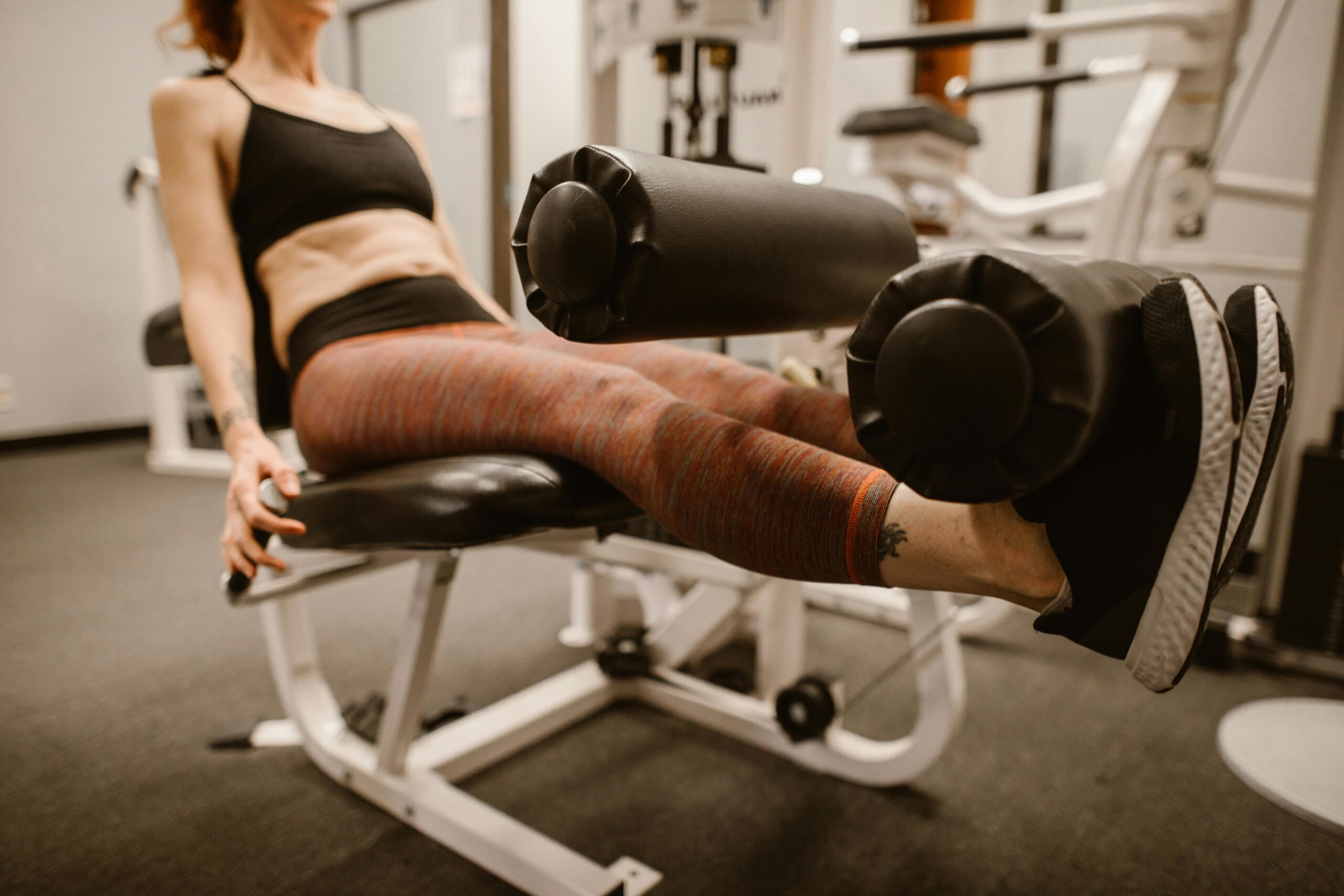
Lying leg curl machines target your hamstrings through knee flexion. Four sets of 10-12 repetitions with a brief squeeze at peak contraction develops the back of your thighs and protects your knees by balancing quad strength.
The hip thrust machine or glute-focused leg press variations build powerful glutes—essential for athletic performance, lower back health, and aesthetic balance. Three sets of 12-15 repetitions with significant resistance create the activation these muscles need.
Calf Construction
Seated calf raise machines target the soleus muscle beneath your larger gastrocnemius. Four sets of 15-20 repetitions with full range of motion—deep stretch at the bottom, complete contraction at the top—develops impressive lower leg mass.
Standing calf raise machines emphasize the gastrocnemius for complete development. Three sets of 12-15 repetitions with varied foot positions (toes in, neutral, toes out) ensure all calf muscle fibers receive adequate stimulus.
📊 Sample Weekly Training Split for Maximum Results
Organizing your machine workouts into an effective weekly structure ensures adequate recovery while maintaining consistent stimulus. Here’s a proven approach that balances training frequency with recuperation:
- Monday: Upper Body Push Focus (chest, shoulders, triceps)
- Tuesday: Lower Body Quad Dominant (leg press, extensions, calves)
- Wednesday: Active Recovery or Rest
- Thursday: Upper Body Pull Focus (back, biceps, rear delts)
- Friday: Lower Body Posterior Chain (hamstrings, glutes, calves)
- Saturday: Full Body Circuit or Weak Point Training
- Sunday: Complete Rest
This split allows each muscle group 48-72 hours recovery while maintaining four to five training sessions weekly. Adjust frequency based on your recovery capacity, work schedule, and training experience. Beginners might combine upper and lower body into three full-body sessions, while advanced lifters might increase frequency with additional volume.
📈 Tracking Progress: The Key to Unstoppable Gains
Without measurement, improvement remains guesswork. Successful trainees meticulously record their workouts, creating a detailed log of weights, repetitions, sets, and how each session felt. This data reveals patterns, identifies plateaus before they become prolonged stalls, and provides motivational evidence of your progress.
Modern fitness tracking applications simplify this process dramatically. Digital workout logs automatically calculate volume, track personal records, and visualize your progress through charts and graphs. Many apps include pre-built machine workout templates you can customize to your specific equipment and goals.
Consistency in tracking transforms your training from hopeful effort into predictable results. Review your logs weekly to ensure you’re implementing progressive overload. If you’ve used the same weight for three consecutive sessions, it’s time to increase resistance or add repetitions.
⚡ Advanced Techniques for Breakthrough Progress
Once you’ve established a solid foundation with basic machine training, incorporating advanced techniques accelerates results and prevents adaptation plateaus. These methods increase intensity without necessarily adding more sets or exercises.
Drop Sets for Muscle Exhaustion
After completing your final set to momentary muscular failure, immediately reduce the weight by 20-30% and continue performing repetitions until failure again. Machines make drop sets particularly effective since you can quickly adjust the weight pin without re-racking plates. One or two drop sets per exercise thoroughly exhaust target muscles.
Rest-Pause Training
Select a weight you can perform for 6-8 repetitions. After reaching failure, rest 15-20 seconds, then perform as many additional reps as possible. Repeat this rest-pause sequence two or three times. This technique generates significant metabolic stress and muscular damage—two key hypertrophy mechanisms.
Pre-Exhaust Method
Perform an isolation exercise immediately before a compound movement targeting the same muscle group. For example, leg extensions before leg press pre-exhausts your quadriceps, ensuring they’re the limiting factor rather than your glutes or hamstrings. This guarantees complete quad stimulation.
🥗 Nutrition: The Essential Partner to Your Training Template
Even the most perfectly designed machine workout template cannot overcome inadequate nutrition. Your body requires proper fuel to execute intense training sessions and sufficient building blocks to repair and construct new muscle tissue.
Protein intake deserves particular attention. Consuming approximately 0.8-1 gram per pound of body weight daily provides the amino acids necessary for muscle protein synthesis. Distribute this intake across four to five meals throughout the day for optimal utilization.
Carbohydrates fuel your training performance. Don’t fall victim to unnecessary carb-phobia. Adequate carbohydrate intake replenishes muscle glycogen, maintains training intensity, and supports recovery. Time your largest carbohydrate portions around your workout window when your body is most receptive.
Healthy fats support hormone production, including testosterone—crucial for muscle building and recovery. Include sources like avocados, nuts, olive oil, and fatty fish regularly in your nutrition plan.
😴 Recovery: Where Progress Actually Happens
Training provides the stimulus, but adaptation occurs during recovery. Your muscles don’t grow in the gym; they grow while you rest. Prioritizing recovery transforms adequate results into exceptional ones.
Sleep represents your most powerful recovery tool. During deep sleep, your body releases growth hormone and conducts the majority of its tissue repair. Aim for seven to nine hours of quality sleep nightly. Maintain consistent sleep and wake times, even on weekends, to optimize your circadian rhythm.
Active recovery on rest days promotes blood flow without creating additional fatigue. Light walking, swimming, or gentle stretching helps clear metabolic waste products and reduces muscle soreness. Avoid the temptation to turn every day into a high-intensity session.
🔄 Periodization: Planning for Long-Term Success
Your body adapts to consistent stimuli, eventually plateauing if training variables remain static. Periodization involves systematically varying your training intensity, volume, and exercise selection to promote continued adaptation while preventing overtraining.
A simple approach involves cycling through four-week blocks. Week one uses moderate weight for higher repetitions (12-15 reps). Week two increases weight slightly while reducing reps (10-12). Week three pushes heavier loads for lower reps (6-8). Week four serves as a deload—reducing volume and intensity by 40-50% to promote recovery before starting the next cycle.
This wavelike progression prevents burnout, reduces injury risk, and ensures your body faces novel stimuli that demand continued adaptation. Advanced trainees might extend cycles to six or eight weeks, but the principle remains constant: planned variation optimizes long-term progress.
🎯 Customizing Templates to Your Unique Goals
While general templates provide excellent frameworks, personalizing your approach based on individual goals, limitations, and preferences maximizes results. Someone training for general fitness requires different programming than a physique competitor preparing for stage.
If hypertrophy represents your primary goal, maintain repetition ranges between 8-15 reps with moderate rest periods (60-90 seconds). This creates optimal mechanical tension and metabolic stress for muscle growth. If strength development takes priority, reduce reps to 3-6 with heavier loads and longer rest periods (2-3 minutes).
Consider your recovery capacity honestly. Factors like age, stress levels, sleep quality, and nutrition all influence how much training you can productively handle. More isn’t always better. A moderate program executed consistently vastly outperforms an aggressive program you can’t sustain.
🚀 Taking Action: Your First Week Strategy
Knowledge without implementation produces zero results. Start your machine workout template journey this week with clarity and confidence. Begin by familiarizing yourself with your gym’s machine layout. Most facilities offer complimentary orientation sessions where staff can demonstrate proper setup and form for each machine.
Your first week should focus on learning movements and establishing baseline performance rather than pushing maximum intensity. Use weights that allow you to complete all prescribed repetitions with excellent form while leaving 2-3 reps in reserve. This conservative approach prevents excessive soreness that might derail your consistency.
Schedule your workouts as non-negotiable appointments. Consistency matters more than perfection. Three solid workouts weekly executed consistently for months will transform your physique more dramatically than sporadic intense sessions whenever motivation strikes.
Take before photos and basic measurements. These objective markers prove invaluable when motivation wanes. The scale doesn’t tell the complete story—body composition changes often occur without significant weight fluctuations. Progress photos reveal changes you might miss in the mirror’s daily glance.
🔥 Maintaining Motivation Through Plateaus and Challenges
Every fitness journey encounters obstacles. Anticipating challenges and developing strategies to overcome them separates those who achieve lasting transformation from those who cycle through endless restarts.
Progress isn’t linear. Some weeks you’ll feel invincible, setting personal records effortlessly. Other weeks, maintaining previous performance feels challenging. These fluctuations are normal, influenced by sleep quality, stress, nutrition, and countless other variables. Trust the process and remain consistent through temporary setbacks.
Build a support system that reinforces your commitment. Training partners create accountability and friendly competition that pushes you beyond self-imposed limitations. Online fitness communities provide encouragement, answer questions, and celebrate your victories when friends and family might not understand your dedication.
Regularly revisit your goals and remind yourself why this matters. Whether pursuing better health, increased confidence, improved athletic performance, or aesthetic transformation, reconnecting with your deeper motivations reignites commitment when discipline alone feels insufficient.
Machine workout templates eliminate confusion and provide the structure necessary for consistent progress. By following proven frameworks, implementing progressive overload, tracking your performance, and supporting your training with proper nutrition and recovery, unstoppable progress becomes inevitable. Your transformation begins not tomorrow or next Monday, but with the decision to start and the commitment to continue regardless of obstacles. The template is ready—now it’s time to execute and watch your fitness reach levels you previously thought impossible.