Building a powerful upper body doesn’t require endless hours with free weights. Machine-based training offers controlled movements, safety, and incredible muscle-building potential when structured correctly.

Whether you’re a beginner looking for guidance or an experienced lifter seeking variation, upper body machines provide consistent resistance and reduce injury risk while delivering remarkable strength gains. This comprehensive workout plan will transform your chest, back, shoulders, and arms through strategic machine exercises designed for maximum hypertrophy and functional power.
💪 Why Choose Machine-Based Upper Body Training
Machine workouts often get dismissed by fitness purists, but this outdated thinking ignores the substantial benefits they offer. Upper body machines provide a stable environment where you can focus purely on muscle contraction without worrying about balance or stabilization.
The fixed movement patterns reduce the learning curve significantly, making them perfect for those new to resistance training. More importantly, machines allow you to safely push to muscular failure without needing a spotter, which is essential for progressive overload and continuous gains.
Research shows that muscle growth responds similarly to free weights and machines when volume and intensity are matched. The key difference lies in execution—machines eliminate technique variables that often limit performance, especially during the final exhausting sets where form typically breaks down.
Understanding Muscle Groups in Your Upper Body Arsenal
Your upper body comprises several major muscle groups that work together to create a balanced, powerful physique. The chest includes the pectoralis major and minor, responsible for pushing movements and upper body stability.
The back muscles—latissimus dorsi, rhomboids, trapezius, and erector spinae—create the foundation for pulling strength and posture. Shoulders involve the deltoids with three distinct heads (anterior, lateral, and posterior) that control arm elevation and rotation.
Your arms contain the biceps for elbow flexion and supination, triceps for extension comprising roughly two-thirds of arm mass, and forearms that govern grip strength. Understanding these muscle groups helps you target each effectively throughout your training program.
🏋️ The Complete Upper Body Machine Workout Structure
This workout plan follows a push-pull-shoulders split performed twice weekly, allowing optimal recovery while maintaining high training frequency. Each session targets specific muscle groups with 4-6 exercises, 3-4 sets per exercise, and 8-12 repetitions for hypertrophy.
Push Day: Chest and Triceps Dominance
Start with the chest press machine, your primary compound movement for pectoral development. Position yourself with shoulder blades retracted, feet planted firmly, and grip width slightly wider than shoulder width. Press forward explosively while maintaining control on the return.
Follow with the incline chest press machine to target upper pectorals, an often-underdeveloped area that creates the shelf-like appearance of a complete chest. Adjust the seat so handles align with your upper chest, not your shoulders.
The pec deck or chest fly machine provides isolated chest work by removing triceps involvement. Focus on squeezing your pectorals together at the movement’s peak, holding briefly before controlling the eccentric phase.
For triceps, the overhead triceps extension machine delivers targeted long-head stimulation. Keep elbows stationary throughout the movement, extending fully at the top without locking out aggressively.
Finish with the triceps pushdown machine or cable attachment, performing 12-15 reps to thoroughly exhaust the muscle with a metabolic pump.
Pull Day: Back and Biceps Development
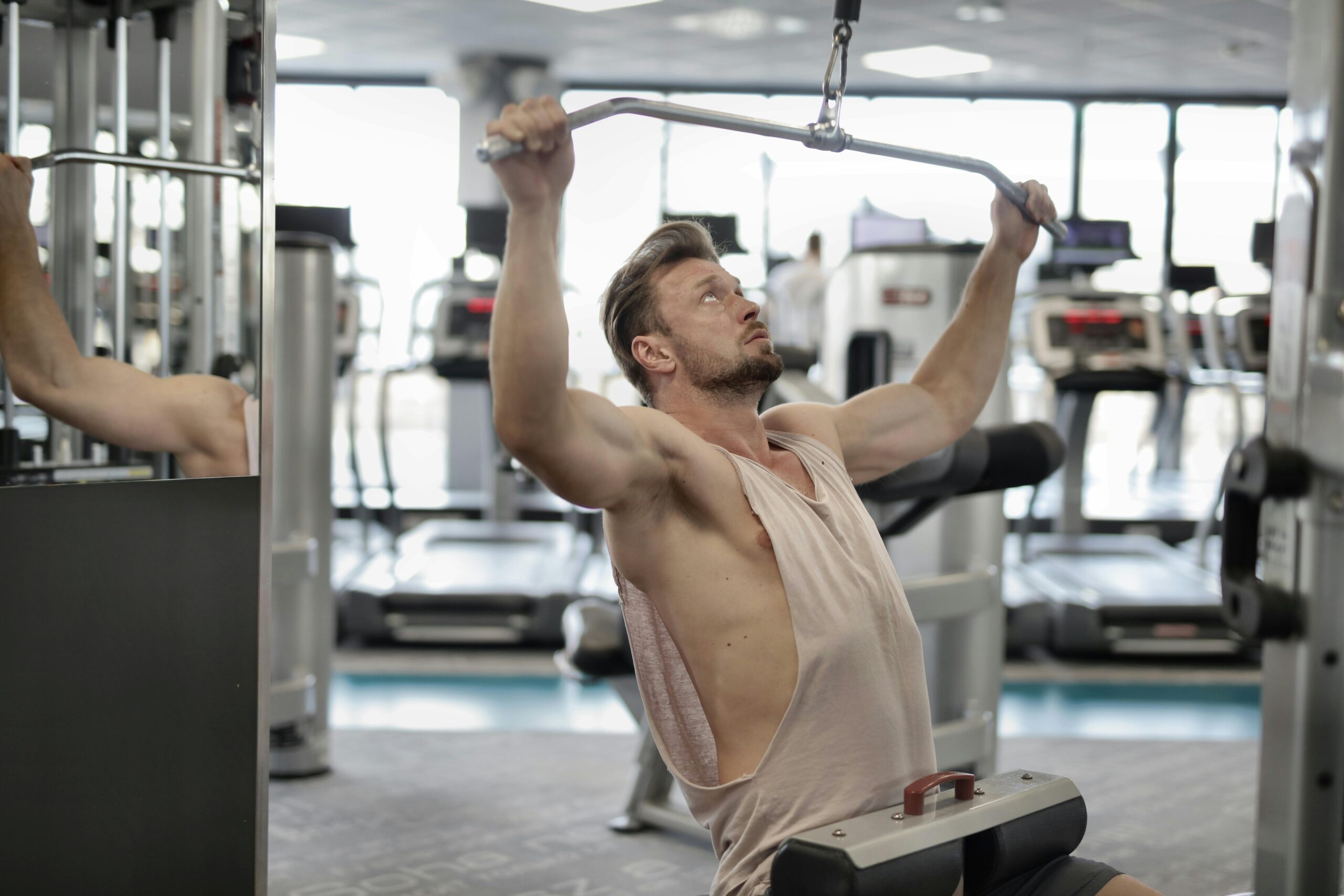
Begin with the lat pulldown machine, the cornerstone of back width development. Use a grip slightly wider than shoulder width, pulling the bar to your upper chest while keeping your torso relatively upright. Avoid excessive leaning backward, which reduces lat activation.
The seated row machine builds back thickness through horizontal pulling. Focus on driving elbows behind your body while squeezing shoulder blades together. Your torso should remain stationary—this isn’t a rowing motion.
Add the assisted pull-up machine if available, working with enough assistance to complete 8-10 quality repetitions. This compound movement recruits nearly every back muscle simultaneously while building functional pulling strength.
The rear delt fly machine targets the often-neglected posterior deltoids while supporting upper back development. Keep a slight bend in elbows and focus on pulling with your rear delts, not your arms.
For biceps, the preacher curl machine isolates the muscle by preventing momentum and shoulder involvement. Position upper arms flush against the pad and curl with controlled tempo, emphasizing the squeeze at peak contraction.
Conclude with the cable bicep curl machine using a straight bar or EZ-bar attachment, performing slightly higher reps (12-15) to maximize blood flow and pump.
Shoulder Day: Deltoid Specialization
The shoulder press machine serves as your primary deltoid builder, emphasizing the anterior and lateral heads. Adjust seat height so handles begin at shoulder level, pressing upward in a natural arc without locking out completely at the top.
Lateral raise machines provide pure middle deltoid isolation, crucial for creating shoulder width and the coveted V-taper. Use controlled movements with a brief pause at the top, resisting the weight on the way down.
Incorporate the reverse pec deck for posterior deltoid work, essential for balanced shoulder development and injury prevention. Position chest against pad with arms slightly bent, pulling handles backward by contracting rear delts.
The front raise machine or cable attachment targets anterior deltoids, though this muscle receives substantial work from pressing movements. Include this exercise if anterior development lags or skip it to avoid overtraining.
Add the shrug machine for trapezius development, elevating shoulders straight upward while holding the peak contraction momentarily. Avoid rolling shoulders, which provides no additional benefit and increases injury risk.
📊 Sample Weekly Training Schedule
| Day | Workout Focus | Key Muscle Groups |
|---|---|---|
| Monday | Push Session A | Chest, Triceps |
| Tuesday | Pull Session A | Back, Biceps |
| Wednesday | Rest or Active Recovery | Stretching, Light Cardio |
| Thursday | Shoulder Session | All Deltoid Heads, Traps |
| Friday | Push Session B | Chest, Triceps |
| Saturday | Pull Session B | Back, Biceps |
| Sunday | Complete Rest | Recovery, Nutrition Focus |
⚙️ Progressive Overload Strategies for Continuous Gains
Muscle growth requires progressive tension increases over time. Simply performing the same workouts repeatedly produces diminishing returns as your body adapts to familiar stress.
Increase weight incrementally when you can complete the upper rep range for all sets with proper form. For most machines, adding 5-10 pounds every 2-3 weeks provides sustainable progression without compromising technique.
Manipulate training volume by adding sets once strength plateaus occur. Moving from 3 to 4 sets per exercise increases total workload by 33%, providing a new growth stimulus.
Vary tempo to enhance time under tension. Try 3-second eccentric phases (lowering) followed by explosive concentric lifts (raising), dramatically increasing muscle fiber recruitment and metabolic stress.
Reduce rest periods gradually from 90 seconds to 60 seconds between sets, boosting workout density and creating greater metabolic demand. This approach works particularly well during fat-loss phases while maintaining muscle mass.
Form Fundamentals That Maximize Machine Effectiveness
Proper machine setup determines exercise effectiveness before you even begin moving weight. Adjust seat height, back pad position, and handle alignment to match your body proportions and maintain joint-friendly angles.
Control every repetition through the complete range of motion without bouncing or using momentum. The eccentric (lowering) phase should take 2-3 seconds, with a brief pause before the concentric (lifting) phase.
Maintain constant tension on target muscles by stopping just short of full lockout on pressing movements and avoiding complete relaxation at the bottom of pulling exercises. This keeps muscles engaged throughout the entire set.
Breathe consistently with proper timing—exhale during the concentric phase when exerting force, inhale during the eccentric phase. Never hold your breath, which can spike blood pressure dangerously.
Focus mentally on the working muscle rather than simply moving weight from point A to point B. This mind-muscle connection significantly enhances muscle activation and subsequent growth stimulus.
🔥 Advanced Techniques to Break Through Plateaus
Drop sets extend a set beyond initial failure by immediately reducing weight and continuing. After reaching failure at your working weight, decrease load by 20-30% and perform additional reps until failure occurs again.
Rest-pause training involves performing reps to failure, resting 15-20 seconds, then squeezing out additional reps. Repeat this process 2-3 times, dramatically increasing total volume and metabolic stress.
Partial reps maintain tension when full-range repetitions become impossible. After reaching failure, perform half or quarter reps in the strongest portion of the movement until complete muscular exhaustion.
Unilateral training with single-arm or single-side machine variations addresses strength imbalances while increasing core stabilization demands. Most cable machines easily accommodate single-limb training.
Pre-exhaustion involves performing an isolation exercise immediately before a compound movement, fatiguing the target muscle so it becomes the limiting factor. For example, pec deck flies before chest press ensure pectorals fail before triceps.
Common Mistakes That Sabotage Your Results
Using excessive weight that compromises form ranks as the most prevalent error in machine training. Ego lifting reduces muscle tension on target areas while increasing injury risk through compensatory movement patterns.
Rushing through repetitions with bouncy, momentum-driven movements eliminates the controlled tension necessary for muscle growth. Quality always trumps quantity when building strength and size.
Neglecting proper warm-up sets leaves muscles unprepared for heavy loads. Perform 1-2 lighter sets of 12-15 reps before working sets to increase blood flow and neural activation.
Training too frequently without adequate recovery prevents muscle protein synthesis from completing. Muscles grow during rest periods, not during workouts themselves.
Ignoring nutrition fundamentals undermines even perfect training programs. Without sufficient protein (0.8-1g per pound bodyweight) and caloric surplus, muscle growth remains severely limited regardless of workout quality.
Nutrition Strategies That Support Maximum Muscle Growth 🥗
Protein intake forms the foundation of muscle building, providing amino acids necessary for muscle protein synthesis. Consume protein with each meal, spreading intake across 4-5 feedings throughout the day.
Carbohydrates fuel intense training sessions and replenish glycogen stores depleted during workouts. Focus carbohydrate intake around training windows—before for energy, after for recovery.
Don’t fear dietary fats, which support hormone production including testosterone, essential for muscle growth. Include sources like avocados, nuts, olive oil, and fatty fish daily.
Stay consistently hydrated as even mild dehydration impairs performance and recovery. Aim for half your bodyweight in ounces daily, increasing during training days.
Consider strategic supplementation including creatine monohydrate (5g daily), whey protein for convenience, and beta-alanine for enhanced training capacity during higher rep sets.
Recovery Optimization for Accelerated Progress
Sleep quantity and quality directly impact muscle recovery, with most individuals requiring 7-9 hours nightly. During deep sleep, growth hormone secretion peaks, facilitating tissue repair and adaptation.
Active recovery involving light movement, stretching, or foam rolling on rest days enhances blood flow without creating additional stress. This promotes nutrient delivery and metabolic waste removal.
Manage stress levels through meditation, adequate leisure time, and avoiding overtraining. Chronically elevated cortisol impairs recovery and muscle building while promoting fat storage.
Schedule deload weeks every 6-8 weeks, reducing training volume and intensity by 40-50%. This planned recovery allows accumulated fatigue to dissipate while maintaining training adaptations.
Track your progress through training logs, progress photos, and strength benchmarks. Monitoring provides objective data showing what works, informing intelligent program adjustments over time.
Injury Prevention Through Smart Training Practices ⚕️
Always warm up with 5-10 minutes of light cardio to increase core temperature and blood flow before beginning resistance training. Follow with dynamic stretching targeting muscles you’ll train.
Listen to your body’s pain signals, distinguishing between productive training discomfort and potentially harmful pain. Sharp, shooting, or joint pain requires immediate attention and possible medical evaluation.
Maintain balanced programming that trains opposing muscle groups equally. For every pressing movement, include an equivalent pulling exercise to prevent muscular imbalances that create injury risk.
Prioritize mobility work for shoulders and thoracic spine, areas particularly vulnerable during upper body training. Include band pull-aparts, wall slides, and shoulder dislocations in your routine.
Never sacrifice form to complete additional repetitions or use heavier weight. The temporary ego boost isn’t worth potential injuries that could sideline training for weeks or months.
Transforming Your Physique Through Consistent Effort
Building an impressive upper body through machine training requires patience, consistency, and intelligent programming. Results don’t appear overnight, but dedicated effort following proven principles produces remarkable transformations.
Focus on progressive overload, proper form, adequate nutrition, and sufficient recovery. These fundamentals, applied consistently over months and years, create the foundation for exceptional strength and muscular development.
Trust the process even when progress seems slow. Muscle building follows a nonlinear path with periods of rapid growth and frustrating plateaus. Stay committed to the long-term journey rather than seeking overnight miracles.
Your upper body machine workout plan provides everything needed to build strength, size, and confidence. Each workout brings you closer to your goals when executed with focus and determination.
Start today, remain consistent, and watch your upper body transform into the powerful, well-developed physique you’ve always wanted. The machines are waiting—now it’s time to put in the work and power up your strength.