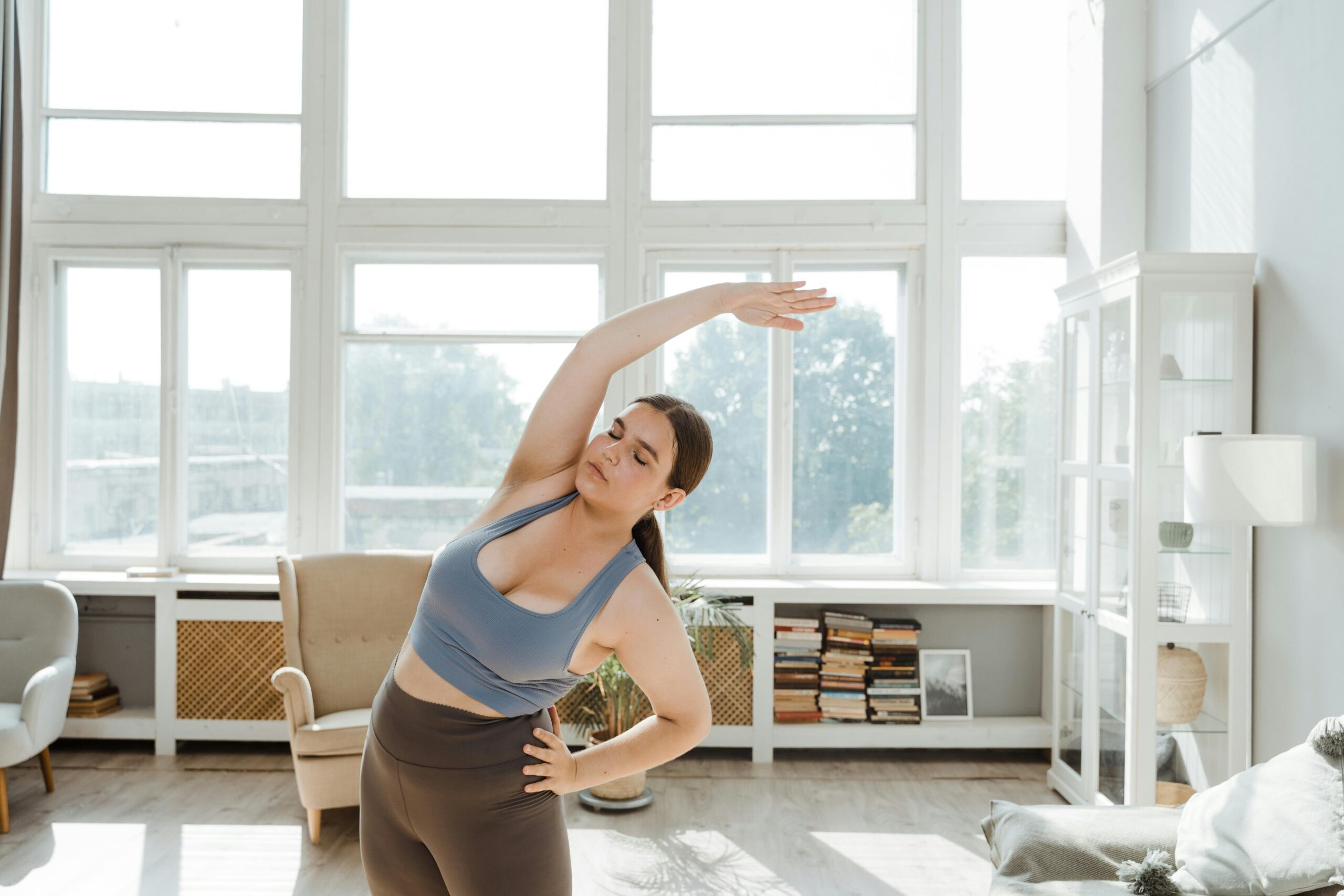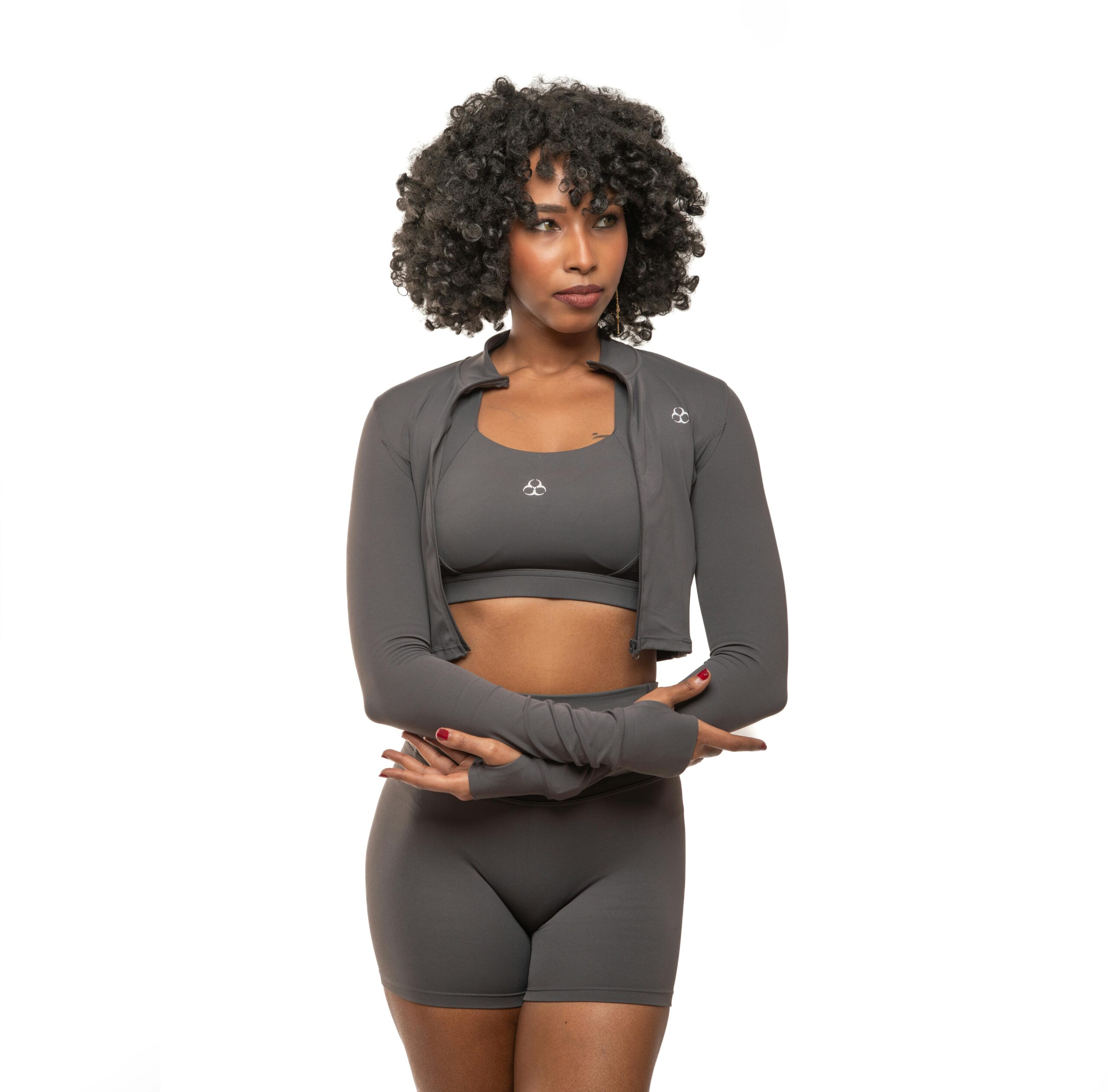
Starting a fitness journey can feel overwhelming, especially when you’re unsure where to begin. Machine-based workouts offer the perfect solution for beginners seeking structure, safety, and results without the intimidation factor of free weights.

Whether you’re stepping into a gym for the first time or returning after a long break, full-body machine workouts provide an excellent foundation for building strength, confidence, and lasting fitness habits. These guided movements help you master proper form while targeting every major muscle group efficiently.
💪 Why Machine Workouts Are Perfect for Fitness Beginners
Gym machines offer distinct advantages that make them ideal starting points for those new to resistance training. Unlike free weights that require significant coordination and stabilization, machines guide your movement patterns along predetermined paths, reducing injury risk while you develop fundamental strength.
The controlled motion of machines allows you to focus entirely on contracting and engaging the target muscles rather than worrying about balance or form breakdown. This learning environment builds confidence rapidly, helping you understand how each muscle group should feel during exercise.
Another compelling benefit is the ease of adjusting resistance. Most machines feature simple pin-selection weight stacks or clearly labeled adjustment points, making it straightforward to track progress and implement progressive overload—the cornerstone principle of strength development.
Safety and Injury Prevention 🛡️
Machines significantly reduce the risk of dropping weights or losing control during exercises, which is particularly important when you’re still developing body awareness and muscle coordination. The fixed movement patterns prevent the common form errors that often lead to strains or injuries in novice lifters.
Built-in safety stops and catches provide additional protection, allowing you to push yourself closer to muscle fatigue without requiring a spotter. This independence is empowering for beginners who might feel self-conscious about asking for assistance.
Understanding Full-Body Training vs. Split Routines
Full-body workouts train all major muscle groups in a single session, typically performed two to three times weekly with rest days between. This approach contrasts with split routines that divide muscle groups across different days, like chest and triceps on Monday, back and biceps on Tuesday, and so forth.
For beginners, full-body training offers superior benefits. You’ll hit each muscle group multiple times per week, which research shows optimizes strength gains during the initial training phase. The frequency also accelerates motor learning—your nervous system becomes more efficient at recruiting muscle fibers.
Additionally, full-body workouts are more forgiving with schedule inconsistencies. If you miss a session, you haven’t completely neglected any muscle group for an entire week. This flexibility helps maintain consistency, which ultimately determines long-term success more than any other factor.
🎯 The Ultimate Beginner Full-Body Machine Workout Program
This comprehensive program targets all major muscle groups using equipment available in most commercial gyms. Perform this workout three times weekly on non-consecutive days, such as Monday, Wednesday, and Friday, allowing adequate recovery between sessions.
Workout Structure and Duration
Each session should take approximately 45-60 minutes, including a proper warm-up and cool-down. Begin with 5-10 minutes of light cardio on a treadmill, stationary bike, or elliptical to elevate your heart rate and prepare your body for resistance training.
For the first two weeks, focus on mastering form with lighter weights, performing 2 sets of each exercise. From weeks three through eight, progress to 3 sets, gradually increasing resistance as movements become comfortable. Rest 60-90 seconds between sets to allow adequate recovery without excessive cooling down.
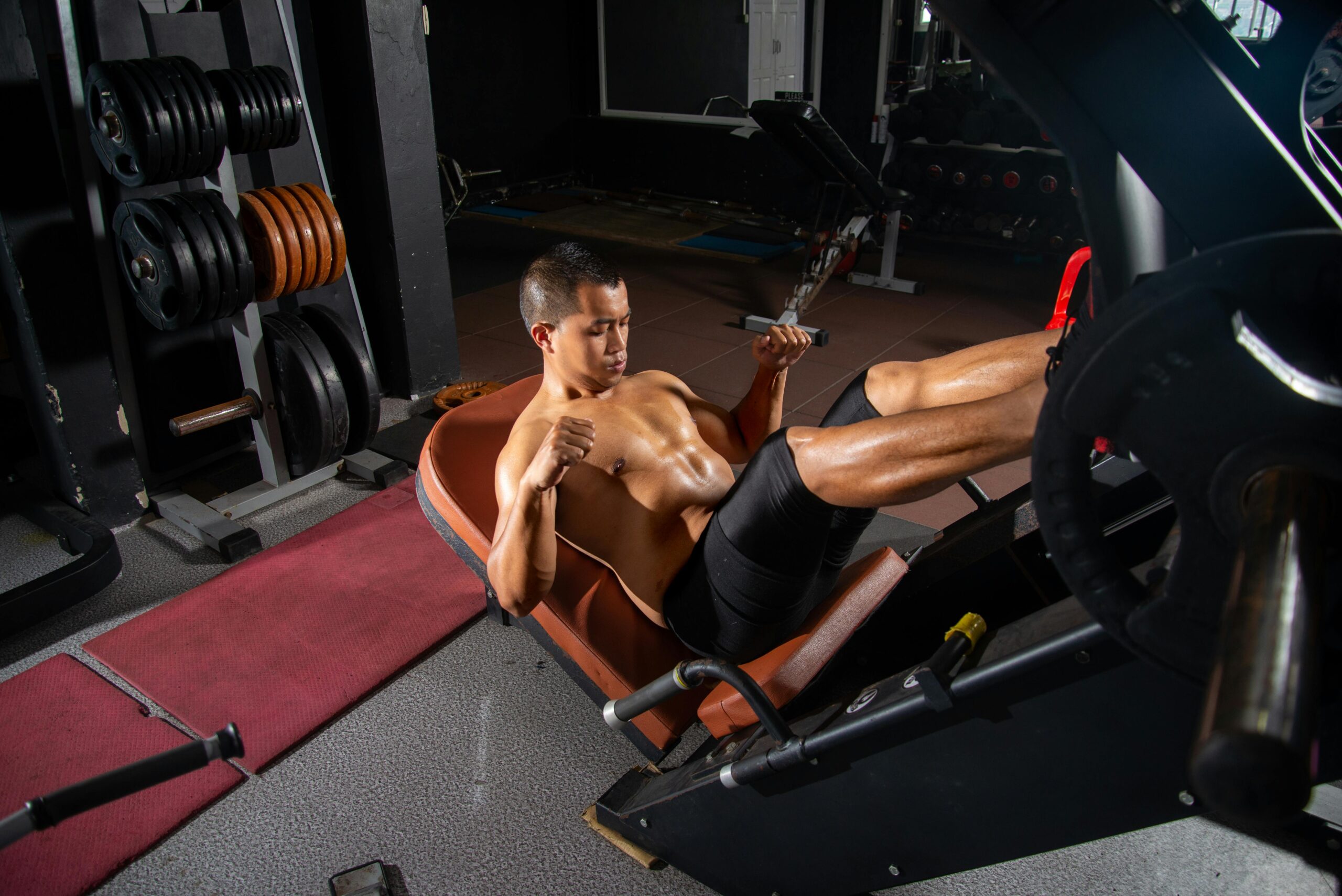
Exercise 1: Leg Press
The leg press develops your quadriceps, hamstrings, and glutes—the largest muscle groups in your body. Sit with your back flat against the pad and feet shoulder-width apart on the platform. Push through your heels to extend your legs, stopping just short of locking your knees, then lower with control.
Target: 3 sets of 10-12 repetitions
Position your feet higher on the platform to emphasize glutes and hamstrings, or lower to target quadriceps more directly. Ensure your knees track in line with your toes throughout the movement to protect joint integrity.
Exercise 2: Chest Press Machine
This movement builds your pectorals, shoulders, and triceps. Adjust the seat height so handles align with mid-chest level. Press handles forward until arms are extended but not locked, then return slowly to the starting position, maintaining tension throughout.
Target: 3 sets of 10-12 repetitions
Keep your shoulder blades retracted against the back pad and avoid letting your shoulders roll forward. Focus on feeling the contraction across your chest rather than simply pushing the weight.
Exercise 3: Lat Pulldown Machine
Lat pulldowns strengthen your back muscles, particularly the latissimus dorsi, while also engaging biceps and rear shoulders. Sit with thighs secured under pads, grip the bar slightly wider than shoulder-width, and pull down toward your upper chest while keeping your torso relatively upright.
Target: 3 sets of 10-12 repetitions
Initiate the movement by driving your elbows down and back rather than simply bending your arms. Imagine crushing cans in your armpits to maximize back engagement and minimize bicep dominance.
Exercise 4: Shoulder Press Machine 💪
This exercise develops your deltoids and upper trapezius muscles. Adjust the seat so handles start at shoulder height. Press upward until arms are extended overhead, then lower back to starting position with controlled tempo.
Target: 3 sets of 10-12 repetitions
Avoid arching your lower back excessively during the press. Engage your core muscles throughout the movement to maintain spinal stability and transfer force efficiently from your torso to your arms.
Exercise 5: Leg Curl Machine
Leg curls isolate your hamstrings, the muscles on the back of your thighs. Lie face down or sit (depending on machine style) with the pad positioned just above your ankles. Curl your heels toward your glutes, squeezing at the top, then extend back to the starting position.
Target: 3 sets of 10-12 repetitions
Control the negative portion of each repetition rather than letting the weight drop quickly. This eccentric control builds strength and protects knee joint health over the long term.
Exercise 6: Seated Row Machine
Seated rows target your mid-back muscles, including rhomboids and trapezius, while also working biceps secondarily. Sit with chest against the pad, grasp handles, and pull back by driving elbows behind your torso. Squeeze shoulder blades together at the end position.
Target: 3 sets of 10-12 repetitions
Maintain contact between your chest and the support pad throughout the exercise. This prevents momentum and ensures your back muscles perform the work rather than your lower body generating force.
Exercise 7: Leg Extension Machine
Leg extensions isolate your quadriceps muscles. Sit with your back against the pad and position the roller pad just above your ankles. Extend your legs until nearly straight, hold briefly, then lower with control back to the starting position.
Target: 3 sets of 10-12 repetitions
Adjust the back pad angle if your machine allows it, finding a position where you feel maximum tension in your thighs without discomfort in your knees. Point your toes slightly upward to enhance quadriceps activation.
Exercise 8: Tricep Extension Machine
This movement isolates the triceps muscles on the back of your upper arms. Sit or stand (depending on machine design), grasp handles, and extend your arms downward or forward until fully straightened, then return to the bent position with control.
Target: 3 sets of 10-12 repetitions
Keep your elbows stationary throughout the movement—they should act as hinges while your forearms do all the moving. This isolation ensures maximum tricep stimulation and minimizes shoulder involvement.
Exercise 9: Bicep Curl Machine 💪
Machine curls develop your biceps and brachialis muscles. Position your elbows on the support pad, grasp handles, and curl them toward your shoulders. Squeeze at the top position, then extend arms back to the starting point.
Target: 3 sets of 10-12 repetitions
Resist the temptation to use momentum by swinging your torso. The pad support should keep your upper arms stable, allowing your biceps to work in isolation for optimal development.
Exercise 10: Abdominal Crunch Machine
Finish your workout with focused core training. Sit in the machine, secure your feet, grasp handles, and crunch forward by flexing your spine, bringing your chest toward your pelvis. Return slowly to the starting position while maintaining tension on your abdominals.
Target: 3 sets of 12-15 repetitions
Exhale forcefully as you crunch forward, imagining pulling your ribcage toward your pelvis rather than simply bending forward. This internal focus creates deeper abdominal activation than external movement cues.
📊 Sample Weekly Training Schedule
| Day | Activity | Duration |
|---|---|---|
| Monday | Full-Body Machine Workout | 45-60 minutes |
| Tuesday | Light Cardio or Rest | 20-30 minutes |
| Wednesday | Full-Body Machine Workout | 45-60 minutes |
| Thursday | Active Recovery (Walking, Yoga) | 20-30 minutes |
| Friday | Full-Body Machine Workout | 45-60 minutes |
| Saturday | Optional Cardio | 30 minutes |
| Sunday | Complete Rest | — |
Progressive Overload: The Key to Continuous Improvement 📈
Simply repeating the same workout indefinitely won’t produce lasting results. Your body adapts to stress by becoming stronger, but once adaptation occurs, further progress stalls unless you increase demands. This principle, called progressive overload, is fundamental to all strength development.
Implement progression through several methods. The most straightforward is adding weight once you can complete all prescribed sets and repetitions with proper form. If you successfully perform 3 sets of 12 repetitions on the chest press, increase resistance by 5-10 pounds the next session.
Alternatively, you can add repetitions before increasing weight. If the program calls for 10-12 reps, start at 10 with challenging weight. Once you reach 12 reps across all sets, add weight and drop back to 10 reps, building up again over subsequent workouts.
Reducing rest periods between sets also intensifies workouts without changing weight or reps. If you currently rest 90 seconds between sets, gradually decrease to 75 then 60 seconds while maintaining performance quality.
🍎 Nutrition Fundamentals for Strength Building
Exercise provides the stimulus for muscle growth, but nutrition supplies the raw materials. Without adequate protein, your body cannot repair and build the muscle tissue you’re breaking down during workouts. Aim for approximately 0.7-1 gram of protein per pound of body weight daily.
Distribute protein intake across multiple meals throughout the day rather than consuming it all at once. Eating protein every 3-4 hours optimizes muscle protein synthesis, the process by which your body builds new muscle tissue.
Carbohydrates fuel your workouts and support recovery. Don’t fall into low-carb diet traps when you’re actively training. Include quality carbohydrate sources like oats, rice, potatoes, and fruits to maintain energy levels and workout performance.
Hydration is equally critical. Aim for at least half your body weight in ounces of water daily, more on training days. Even mild dehydration impairs strength performance and recovery processes.
Recovery and Rest: When Growth Actually Happens 😴
Many beginners mistakenly believe that muscles grow during workouts. In reality, training creates microscopic damage to muscle fibers. Growth occurs during rest periods when your body repairs this damage, building tissues back stronger and slightly larger than before.
Sleep represents the most critical recovery period. During deep sleep stages, your body releases growth hormone and other anabolic compounds that facilitate muscle repair. Prioritize 7-9 hours of quality sleep nightly to maximize your training results.
Rest days aren’t laziness—they’re strategic recovery opportunities. Schedule at least one complete rest day weekly, more if you’re feeling excessively fatigued or sore. Light activities like walking or gentle stretching are fine, but avoid intense exercise.
Listen to your body’s signals. Persistent muscle soreness, declining performance, mood changes, or sleep disturbances indicate inadequate recovery. When these signs appear, add an extra rest day rather than pushing through and risking overtraining.
Tracking Progress Beyond the Scale 📝
Body weight alone tells an incomplete story, especially when you’re building muscle while potentially losing fat. Multiple measurement methods provide fuller understanding of your transformation.
Keep a training log recording weights, sets, and repetitions for each exercise. Seeing these numbers increase over weeks and months provides objective evidence of strength gains, maintaining motivation during plateaus.
Take progress photos every two weeks in consistent lighting and clothing. Visual changes often become apparent in photos before you notice them in the mirror, since you see yourself daily and adapt to gradual changes.
Consider body measurements with a tape measure around chest, waist, hips, arms, and thighs. These circumferences reveal changes in body composition that scales cannot detect.
Performance improvements extend beyond the gym. Notice whether daily activities like carrying groceries or climbing stairs become easier. These functional strength gains represent real-world benefits that matter more than any aesthetic change.
🚀 Advancing Beyond the Beginner Phase
This program provides an excellent foundation for 8-12 weeks, after which you’ll have developed significant baseline strength and movement proficiency. At that point, consider progressing to more advanced training methods.
You might incorporate free weights like dumbbells and barbells, which require greater stabilization and recruit more muscle fibers. Compound movements like squats, deadlifts, and bench presses become accessible once you’ve built foundational strength.
Split routines become more appropriate as you advance. Dedicating entire sessions to specific muscle groups allows greater training volume per body part while maintaining adequate recovery between workouts.
Training intensity techniques like supersets, drop sets, and tempo variations add complexity and challenge to your workouts. However, master the fundamentals thoroughly before exploring these advanced methods.
Common Mistakes to Avoid on Your Fitness Journey ⚠️
Starting with excessive weight is the most prevalent beginner error. Ego lifting compromises form, increases injury risk, and actually reduces muscle stimulation. Begin conservatively, focusing on movement quality rather than weight moved.
Inconsistent training undermines progress more than any other factor. Working out intensely for two weeks then taking a week off creates an endless cycle of starting over. Commit to your schedule, recognizing that mediocre consistency beats perfect inconsistency every time.
Neglecting proper breathing during exercises limits performance and can cause dangerous blood pressure spikes. Exhale during the exertion phase (pushing, pulling, lifting) and inhale during the easier portion of each repetition.
Comparing your beginning to someone else’s middle creates unnecessary discouragement. Everyone starts somewhere, and the impressive physiques you see at the gym represent years of consistent effort. Focus on your own progress rather than others’ accomplishments.
Building Long-Term Fitness Habits That Stick 🎯
Transformation requires more than an eight-week program—it demands lifestyle changes that become permanent habits. Start by scheduling workouts like non-negotiable appointments rather than fitting them in when convenient.
Find aspects of training you genuinely enjoy. If you dread every session, long-term adherence becomes unlikely. Experiment with different workout times, music, or training partners until you discover approaches that feel sustainable rather than punishing.
Celebrate non-scale victories: completing a challenging workout, adding weight to an exercise, or simply showing up on a difficult day. These small wins accumulate into significant transformations over time.
Remember that setbacks will occur—missed workouts, dietary indulgences, or temporary motivation lapses. The difference between those who succeed long-term and those who quit is simply getting back on track after setbacks rather than viewing them as permanent failures.
Your fitness journey is exactly that—a journey, not a destination. There is no finish line where you’ve “arrived” and can stop working. Instead, embrace the process of continuous improvement, recognizing that each workout makes you slightly stronger, more capable, and more confident than before. This beginner full-body machine workout program provides the perfect starting point, offering structure, safety, and proven effectiveness as you build the foundation for a lifetime of strength and health.