Building a powerful lower body doesn’t require endless hours with free weights. Machine-based workouts offer controlled, effective movements that target every muscle group from your glutes to your calves, delivering exceptional results for strength, definition, and explosive power.

Whether you’re recovering from injury, new to strength training, or simply want to maximize your leg day efficiency, lower body machines provide stability, safety, and precision. This comprehensive workout plan will transform how you approach leg training, combining science-backed exercises with progressive strategies that deliver measurable results.
🏋️ Why Lower Body Machines Deserve Your Attention
Machines often get dismissed by hardcore lifters, but this overlooks their tremendous benefits for building a powerful lower body. Unlike free weights that demand perfect form and balance, machines allow you to isolate specific muscle groups while minimizing injury risk.
The controlled movement patterns ensure consistent tension throughout each repetition, which is crucial for muscle hypertrophy. You can push closer to failure safely without worrying about dropping weights or losing balance. This controlled environment is particularly valuable when training without a spotter.
Research shows that muscle growth responds equally well to machine and free-weight training when volume and intensity are matched. The key advantage? Machines let you maintain proper form even when fatigue sets in, ensuring you’re actually working the target muscles rather than compensating with secondary muscle groups.
Understanding Your Lower Body Muscle Architecture
Before diving into specific exercises, understanding your lower body anatomy helps you train smarter. Your lower body comprises several major muscle groups that work synergistically to create movement, stability, and power.
The quadriceps (front thigh) consists of four muscles responsible for knee extension. Your hamstrings (back thigh) contain three muscles that flex the knee and extend the hip. The glutes—maximus, medius, and minimus—power hip extension and provide stability during movement.
Your calves include the gastrocnemius and soleus, controlling ankle movement and providing propulsive force. The adductors (inner thigh) bring your legs together, while the abductors (outer thigh) move them apart. A complete lower body program addresses all these muscle groups with appropriate volume and intensity.
💪 The Ultimate Lower Body Machine Workout Structure
This workout plan follows a three-day split that allows adequate recovery while maximizing muscle stimulation. Each session focuses on different movement patterns and muscle emphasis, preventing overtraining while building comprehensive lower body strength.
Day 1: Quad-Dominant Power Session
Your first session emphasizes quadriceps development with compound movements that also engage your glutes and hamstrings. This workout builds foundational strength and sets the tone for your transformation.
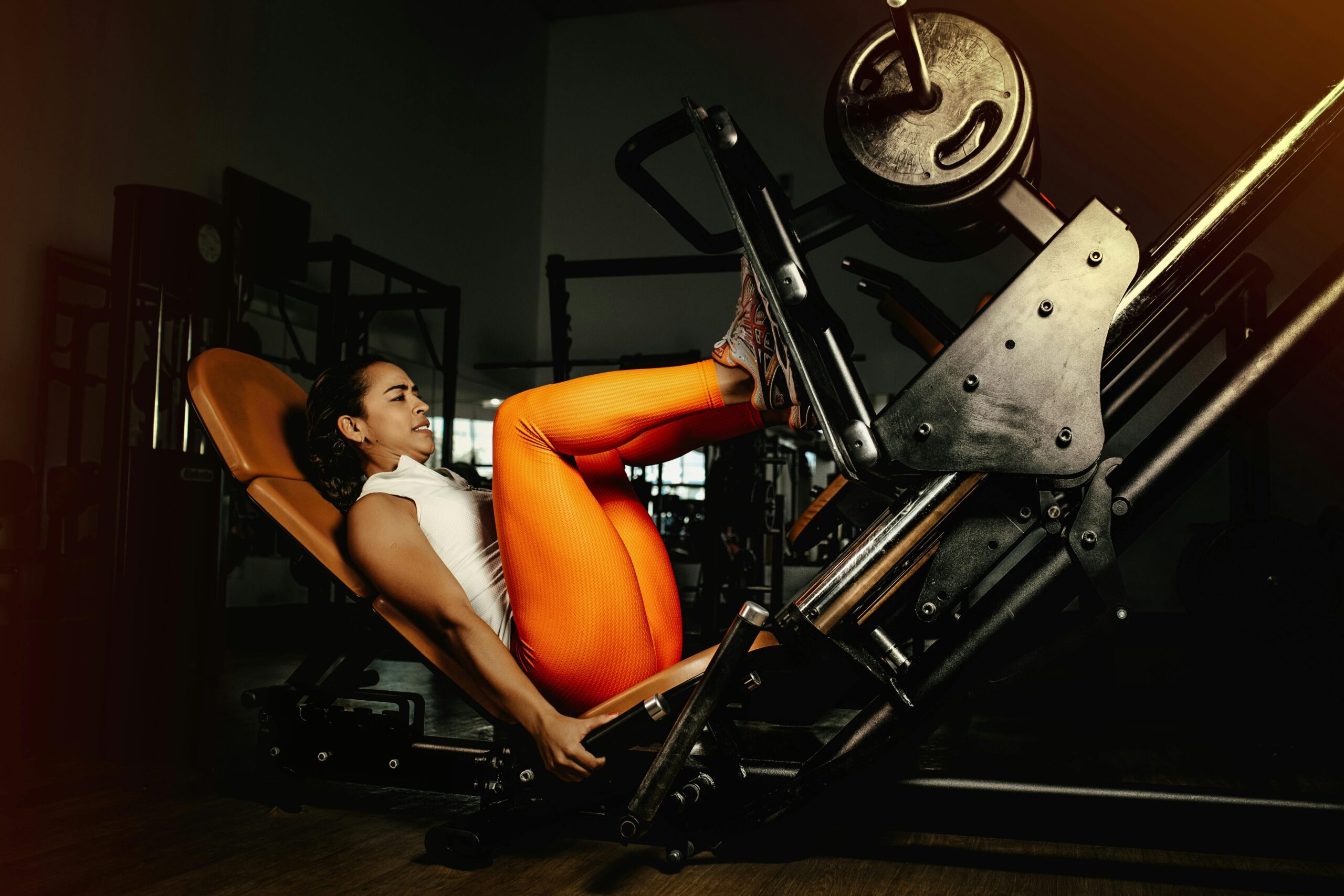
Leg Press: 4 sets of 8-12 reps. Position your feet shoulder-width apart in the middle of the platform. Lower the weight until your knees reach approximately 90 degrees, then drive through your heels. This exercise builds overall leg mass while protecting your lower back.
Hack Squat Machine: 3 sets of 10-15 reps. Keep your back flat against the pad and feet positioned forward. The angled movement path targets your quads intensely while maintaining knee safety. Control the descent for three seconds to maximize time under tension.
Leg Extension: 3 sets of 12-15 reps. Adjust the pad so it rests just above your ankles. Extend fully at the top, squeezing your quads for one second. This isolation exercise ensures complete quadriceps development, particularly the vastus medialis near your knee.
Smith Machine Bulgarian Split Squat: 3 sets of 10 reps per leg. Elevate your rear foot on a bench while your front foot positions under the bar. This unilateral movement corrects strength imbalances while intensely working your quads and glutes.
Day 2: Posterior Chain Power Development
The second session targets your hamstrings, glutes, and lower back—the often-neglected posterior chain that generates explosive power and athletic performance. These muscles are crucial for sprinting, jumping, and overall functional strength.
Lying Leg Curl: 4 sets of 10-12 reps. Position yourself face-down with the pad against your lower calves. Curl your heels toward your glutes, pausing at the top. This exercise isolates your hamstrings without lower back stress.
Seated Leg Curl: 3 sets of 12-15 reps. The seated variation emphasizes the lower hamstring region differently than lying curls. Lean slightly forward to increase the stretch, then curl powerfully while keeping your hips pressed into the seat.
Smith Machine Romanian Deadlift: 4 sets of 8-10 reps. Stand with feet hip-width apart, maintaining a slight knee bend throughout. Hinge at your hips, lowering the bar along your thighs until you feel a deep hamstring stretch. This compound movement builds powerful hamstrings and glutes.
Cable Pull-Through: 3 sets of 15 reps. Facing away from a low cable pulley, hold the rope between your legs. Hinge forward, then explosively extend your hips. This exercise teaches proper hip hinge mechanics while building glute power.
Day 3: Complete Lower Body Sculpting
Your final weekly session combines exercises for comprehensive development, including often-neglected muscle groups like calves, adductors, and abductors. This balanced approach ensures aesthetic symmetry and functional strength.
Smith Machine Sumo Squat: 4 sets of 10-12 reps. Position feet wider than shoulder-width with toes pointed outward. This stance emphasizes your inner thighs and glutes while allowing deeper squatting depth. Keep your torso upright throughout the movement.
Hip Abduction Machine: 3 sets of 15-20 reps. This machine specifically targets your gluteus medius and hip stabilizers. Push outward against the pads in a controlled manner, holding the stretched position briefly. Strong abductors prevent knee valgus and improve athletic performance.
Hip Adduction Machine: 3 sets of 15-20 reps. The complementary movement to abduction, this exercise strengthens your inner thighs. Balanced adductor and abductor strength prevents injuries and creates complete leg development.
Standing Calf Raise Machine: 4 sets of 12-15 reps. Position the balls of your feet on the platform edge, allowing your heels to drop below platform level. Rise onto your toes, squeezing at the top. Strong calves improve jumping ability and complete your lower body aesthetics.
Seated Calf Raise Machine: 3 sets of 15-20 reps. This variation emphasizes the soleus muscle beneath your gastrocnemius. The seated position requires higher repetitions to fatigue this endurance-oriented muscle effectively.
🎯 Progressive Overload Strategies for Continuous Gains
Simply performing exercises isn’t enough—you must progressively challenge your muscles to force adaptation. Progressive overload means gradually increasing training stress over time through various methods.
The most straightforward approach involves adding weight. Once you can complete all prescribed repetitions with proper form, increase the load by 5-10 pounds. This linear progression works exceptionally well for beginners and early intermediates.
Alternatively, increase volume by adding sets or repetitions. If you’re performing 3 sets of 10 reps, progress to 3 sets of 12, then 4 sets of 10. This approach works when you’ve reached strength plateaus or can’t safely add more weight.
Manipulating tempo provides another progression method. Slowing your eccentric (lowering) phase to 4-5 seconds dramatically increases time under tension without requiring heavier weights. This technique particularly benefits muscle hypertrophy while reducing joint stress.
Perfecting Your Form for Maximum Results
Even with machines providing stability, proper form remains crucial for safety and effectiveness. Poor technique not only limits results but increases injury risk, potentially derailing your entire training program.
Always adjust machines to fit your body proportions before starting. Seats, pads, and pivot points should align with your joints to ensure natural movement paths. Taking sixty seconds to adjust equipment properly prevents years of joint problems.
Maintain tension throughout the entire range of motion. Avoid locking out joints at movement endpoints, which transfers stress from muscles to joints. Keep constant tension on your target muscles for maximum growth stimulus.
Control the eccentric phase rather than letting weight slam down. The lowering portion generates significant muscle damage—a primary driver of growth. Aim for 2-3 second negatives on most exercises to maximize this benefit.
🔥 Nutrition Strategies to Fuel Your Transformation
Training provides the stimulus for growth, but nutrition supplies the building blocks. Without adequate calories and protein, even the perfect workout program won’t deliver the transformation you’re seeking.
Consume 0.7-1 gram of protein per pound of bodyweight daily. This ensures adequate amino acids for muscle repair and growth. Distribute protein across 4-5 meals for optimal muscle protein synthesis throughout the day.
Carbohydrates fuel high-intensity training and replenish glycogen stores. Aim for 2-3 grams per pound of bodyweight on training days, focusing on whole grains, fruits, and vegetables. Pre-workout carbs provide energy, while post-workout carbs accelerate recovery.
Don’t fear dietary fat—it’s essential for hormone production, including testosterone. Include healthy fats from avocados, nuts, olive oil, and fatty fish. Aim for 0.3-0.4 grams per pound of bodyweight to support hormonal health.
Recovery Protocols That Accelerate Progress
Muscle growth occurs during recovery, not training. Your workout breaks down muscle tissue; rest allows it to rebuild stronger. Neglecting recovery undermines your hard work and limits results.
Sleep represents your most powerful recovery tool. Aim for 7-9 hours nightly, as growth hormone secretion peaks during deep sleep. Poor sleep increases cortisol, decreases testosterone, and impairs protein synthesis—sabotaging your transformation.
Active recovery between sessions promotes blood flow without creating additional muscle damage. Light walking, swimming, or yoga helps clear metabolic waste products while maintaining mobility. These gentle activities actually speed recovery compared to complete rest.
Consider foam rolling and stretching after workouts to reduce muscle tension and improve flexibility. Spend 10-15 minutes addressing tight areas, particularly hip flexors, IT bands, and calves. Improved flexibility enhances exercise range of motion and reduces injury risk.
📊 Tracking Progress Beyond the Scale
The scale provides limited information about your transformation. Muscle weighs more than fat, so you might gain weight while losing inches and looking dramatically better. Use multiple metrics to assess progress accurately.
Take progress photos every two weeks under consistent lighting and poses. Visual changes often appear before measurements shift. Front, side, and back photos provide comprehensive documentation of your transformation.
Measure key body parts including thighs, calves, and hips monthly. Use the same measuring tape in identical locations for accuracy. Increasing muscle measurements while waist measurements decrease indicates successful body recomposition.
Track performance improvements in your workout log. If you’re lifting heavier weights or completing more repetitions, you’re building strength regardless of scale fluctuations. Progressive overload in the gym translates to physical changes over time.
Common Mistakes That Sabotage Lower Body Development
Many trainees unknowingly commit errors that limit results or increase injury risk. Identifying and correcting these mistakes accelerates your progress while keeping you healthy for long-term training.
Training legs once weekly provides insufficient stimulus for optimal growth. Lower body muscles are large and resilient, requiring 2-3 weekly sessions for maximum development. The three-day split in this program provides adequate frequency without overtraining.
Neglecting single-leg exercises creates strength imbalances that hinder performance and increase injury risk. Everyone has a stronger leg that compensates during bilateral movements. Unilateral exercises like Bulgarian split squats correct these imbalances.
Using excessive weight with partial range of motion severely limits muscle development. Full range of motion engages more muscle fibers and creates greater growth stimulus. Check your ego, reduce weight if necessary, and focus on complete repetitions.
💡 Advanced Techniques for Breaking Through Plateaus
Eventually, standard progressive overload may slow as you advance. These advanced techniques provide additional stimulus to restart growth when progress stalls.
Drop sets involve performing a set to failure, immediately reducing weight by 20-30%, then continuing to failure again. This extends your set beyond normal failure points, creating enormous metabolic stress. Use sparingly on your final set of an exercise.
Rest-pause training has you perform a set to failure, rest 15-20 seconds, then squeeze out additional repetitions. Repeat 2-3 times. This technique allows more total volume with a given weight than traditional straight sets.
Pre-exhaustion involves performing an isolation exercise immediately before a compound movement. For example, leg extensions before leg press. This ensures your quads receive maximum stimulation even if other muscles fatigue first during the compound lift.
Adapting the Program for Your Specific Goals
This program provides a strong foundation, but individual goals may require modifications. Understanding how to adjust variables ensures the program serves your specific transformation objectives.
For maximum strength, reduce repetitions to 4-6 per set while increasing weight and rest periods to 3-4 minutes. Focus on compound movements like leg press and hack squats, reducing isolation work. Strength development requires heavy loads and complete recovery between sets.
For muscle endurance and definition, increase repetitions to 15-20 per set with shorter 45-60 second rest periods. This approach creates metabolic stress and cardiovascular conditioning while maintaining muscle mass. Higher volume with moderate weights creates the “toned” appearance many seek.
For maximum hypertrophy, maintain the prescribed 8-15 rep range but increase total weekly volume. Add an extra set to each exercise or include additional exercises. Muscle growth correlates strongly with total weekly volume for each muscle group.
🌟 The Mental Game of Lower Body Training
Leg training is notoriously challenging—both physically and mentally. Building mental toughness specifically for lower body workouts separates those who transform their physique from those who remain stagnant.
Prepare mentally before entering the gym. Visualize yourself completing every rep with perfect form and intensity. Mental rehearsal activates similar neural pathways as physical practice, priming your nervous system for peak performance.
Develop a pre-workout ritual that signals your brain it’s time to train. This might include specific music, a particular pre-workout snack, or visualization exercises. Consistent rituals create psychological triggers that enhance focus and motivation.
Embrace discomfort as growth. The burning sensation during leg training indicates muscles working at high intensity—exactly what drives adaptation. Reframe discomfort as positive feedback rather than something to avoid. This mindset shift transforms training from suffering to opportunity.
Long-Term Success: Building Sustainable Training Habits
Short-term motivation fades quickly. Sustainable transformation requires building habits that persist regardless of temporary motivation fluctuations. These strategies ensure your lower body program becomes a permanent lifestyle component.
Schedule training sessions like important appointments. Treating workouts as non-negotiable commitments increases consistency dramatically. Choose specific days and times, then defend these slots against competing demands.
Find training partners or join communities focused on strength development. Social accountability and shared experience make training more enjoyable while reducing skip rates. Even online communities provide valuable support and motivation.
Celebrate non-scale victories regularly. Acknowledge when you lift heavier weights, complete more reps, or simply show up despite not feeling motivated. These small wins compound into major transformations over time.
Your lower body transformation begins with a single workout. This comprehensive machine-based program provides everything needed to build strength, develop aesthetic muscle tone, and generate explosive power. Consistency and progressive effort will transform your lower body beyond what you currently imagine possible. Start today, trust the process, and watch your legs become your greatest physical asset.